
Intermittent Fasting With Indian Food: Benefits, Risks and Who Should Avoid It
By admin · Published October 19, 2026 · Updated October 19, 2026
Intermittent fasting attracts attention because it simplifies eating hours, but it is not automatically superior to other sustainable approaches. What and how much you eat still matters.
What matters most
Some adults find a consistent eating window convenient. Others experience headaches, irritability, overeating or disrupted social routines. Fasting is inappropriate for some groups, including pregnancy and people with eating disorders; those on diabetes medication need medical supervision.
Practical Indian meal ideas and action steps
If appropriate for you, start by keeping regular meals and avoiding late-night grazing rather than jumping into long fasts. During your eating window, include dal, vegetables, fruit, roti or rice and protein-rich foods. Keep hydrated, and do not compensate with oversized meals.
Common mistakes to avoid
Do not treat dizziness or low blood sugar as evidence the method is working. Stop and seek advice if symptoms occur.
A practical next step
Start with one change you can follow consistently for two weeks, such as adding a protein food to breakfast, increasing vegetables or planning weekday dinners. Review energy, hunger, daily routine and health goals before making further changes. Nutrition works best when it is personalized and sustainable.
Frequently asked question
Is a 16:8 schedule necessary to lose weight?
No. Many people lose weight through regular meal timing and a suitable overall dietary pattern without fasting.
Explore related support
Book a dietitian consultation ↗
Further reading
General education only. Not a substitute for individualized medical advice. No diet can guarantee a particular result.
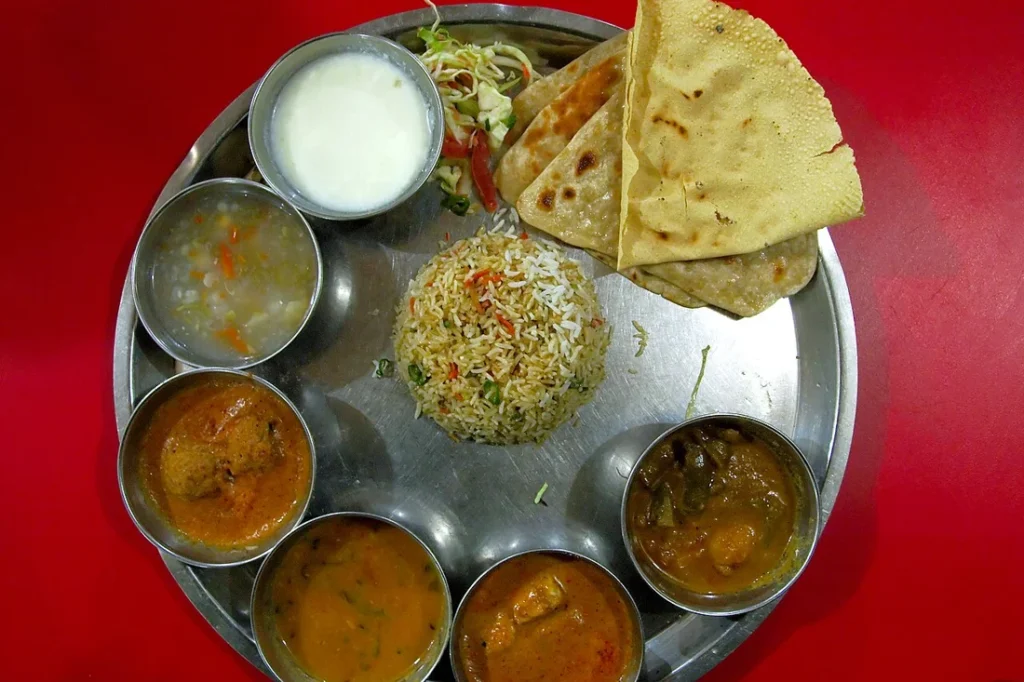
Illustrative image. Photo: File:Darjeeling, India, Indian Thali meal.jpg by Vyacheslav Argenberg · CC BY 4.0. Resized and converted to WebP.